This browser is not actively supported anymore. For the best passle experience, we strongly recommend you upgrade your browser.
Asset 3
  • About
  • People
  • Capabilities
  • Insights
  • Careers
  • Public Interest
  • Inclusion
Contact Us Offices
  • Contact us
    Contact us
  • Locations
    Offices
  • Search
    Search
  • About
    • About
    • Message From the CEO
    • Firm History
    • Alumni
    • Alumni
    • In Memoriam
  • People
  • Capabilities
    • Practices
    • Industries
    • Geographies
    • Bankruptcy & Restructuring
    • Brand & Reputation Management
    • Intellectual Property
    • Litigation & Dispute Resolution
    • Special Situations, Distressed Debt and Debt Trading
    • Transactions
    • Tax
    • White Collar Defense, Investigations & Compliance
    • Energy & Environmental
    • Entertainment & Media
    • Investment Management 
    • Life Sciences
    • Real Estate
    • Technology
    • United States
    • United Kingdom
    • Global Reach: The Law Firm Network
    • Bankruptcy & Restructuring
    • Bankruptcy Litigation
    • Mass Torts Bankruptcy
    • Brand & Reputation Management
    • Name, Image & Likeness (NIL)
    • Intellectual Property
    • Intellectual Property Litigation
    • Intellectual Property Transactions & Licensing
    • Patent Prosecution & Transactions
    • Trademark, Copyright & Advertising
    • Patent Trial and Appeals Board (PTAB)
    • Litigation & Dispute Resolution
    • Civil Fraud Litigation
    • Class Actions and Multi-District Litigation
    • Employment Practices and Litigation
    • Government Contracts Litigation
    • Intellectual Property Litigation
    • Insurance Recovery
    • Litigation Funding
    • M&A and Private Equity Litigation
    • Oil & Gas Litigation
    • Patent Trial and Appeals Board (PTAB)
    • UK Tax Controversy & Litigation
    • Special Situations, Distressed Debt and Debt Trading
    • Distressed Debt & Claims Trading
    • Litigation Funding
    • Finance
    • Real Estate Special Situations
    • Transactions
    • Capital Markets
    • Cross-Border Transactions
    • Distressed Real Estate
    • Emerging Growth Companies & Venture Capital
    • Employment
    • Finance
    • Franchising
    • Hospitality & Leisure
    • Intellectual Property Transactions & Licensing
    • Mergers & Acquisitions
    • Real Estate
    • Special Situations
    • Wireless Network Infrastructure
    • White Collar Defense, Investigations & Compliance
    • Economic Sanctions & Export Controls
    • Energy & Environmental
    • Energy
    • Energy Transition
    • Environmental
    • Oil & Gas Litigation
    • Entertainment & Media
    • Brand & Reputation Management
    • Intellectual Property
    • Name, Image & Likeness (NIL)
    • Sports
    • Investment Management
    • Fund Formation
    • Private Equity Transactions
    • Distressed Debt
    • Emerging Growth Companies & Venture Capital
    • Family-Owned & Closely Held Businesses
    • Private Equity Litigation
    • Technology
    • Artificial Intelligence
    • Cybersecurity & Data Privacy
    • Digital Commerce
    • Fintech
    • Real Estate
    • Distressed Real Estate
    • Hospitality & Leisure
    • Real Estate Litigation
    • Real Estate Special Situations
    • Wireless Network Infrastructure
  • Insights
    • Client News
    • Firm News
    • Briefings
    • Events
  • Careers
    • Experienced Lawyers
    • U.S. Law Students
    • London Trainee Program
    • Business Professionals
    • Learning
  • Public Interest
    • Brown Rudnick Charitable Foundation
    • Pro Bono & Community Service
  • Inclusion
    • Inclusion
    • Women in Business Series
  • Contact Us
  • Location
  • Search
  • About
    • About
    • Message From the CEO
    • Firm History
    • Alumni
    • Alumni
    • In Memoriam
  • People
  • Capabilities
    • Practices
    • Industries
    • Geographies
    • Bankruptcy & Restructuring
    • Brand & Reputation Management
    • Intellectual Property
    • Litigation & Dispute Resolution
    • Special Situations, Distressed Debt and Debt Trading
    • Transactions
    • Tax
    • White Collar Defense, Investigations & Compliance
    • Energy & Environmental
    • Entertainment & Media
    • Investment Management 
    • Life Sciences
    • Technology
    • Real Estate
    • United States
    • United Kingdom
    • Global Reach: The Law Firm Network
    • Bankruptcy & Restructuring
    • Bankruptcy Litigation
    • Mass Torts Bankruptcy
    • Brand & Reputation Management
    • Name, Image & Likeness (NIL)
    • Intellectual Property
    • Intellectual Property Litigation
    • Patent Prosecution & Transactions
    • Trademark, Copyright & Advertising
    • Patent Trial and Appeals Board (PTAB)
    • Litigation & Dispute Resolution
    • Civil Fraud Litigation
    • Class Actions and Multi-District Litigation
    • Employment Practices and Litigation
    • Government Contracts Litigation
    • Intellectual Property Litigation
    • Insurance Recovery
    • Litigation Funding
    • M&A and Private Equity Litigation
    • Real Estate Litigation
    • Patent Trial and Appeals Board (PTAB)
    • UK Tax Controversy & Litigation
    • Special Situations, Distressed Debt and Debt Trading
    • Distressed Debt & Claims Trading
    • Litigation Funding
    • Finance
    • Real Estate Special Situations
    • Transactions
    • Capital Markets
    • Cross-Border Transactions
    • Distressed Real Estate
    • Emerging Growth Companies & Venture Capital
    • Employment
    • Finance
    • Franchising
    • Hospitality & Leisure
    • Mergers & Acquisitions
    • Real Estate
    • Special Situations
    • Wireless Network Infrastructure
    • Tax
    • White Collar Defense, Investigations & Compliance
    • Economic Sanctions & Export Controls
    • Energy & Environmental
    • Energy
    • Energy Transition
    • Environmental
    • Oil & Gas Litigation
    • Entertainment & Media
    • Brand & Reputation Management
    • Intellectual Property
    • Name, Image & Likeness (NIL)
    • Sports
    • Investment Management
    • Fund Formation
    • Private Equity Transactions
    • Distressed Debt
    • Emerging Growth Companies & Venture Capital
    • Family-Owned & Closely Held Businesses
    • Private Equity Litigation
    • Technology
    • Artificial Intelligence
    • Cybersecurity & Data Privacy
    • Digital Commerce
    • Fintech
    • Real Estate
    • Distressed Real Estate
    • Hospitality & Leisure
    • Real Estate Special Situations
    • Real Estate Litigation
    • Wireless Network Infrastructure
  • Insights
    • Client News
    • Firm News
    • Briefings
    • Events
  • Careers
    • Experienced Lawyers
    • U.S. Law Students
    • London Trainee Program
    • Business Professionals
    • Learning
  • Public Interest
    • Brown Rudnick Charitable Foundation
    • Pro Bono & Community Service
  • Inclusion
    • Inclusion
    • Women in Business Series

Search People

Search by last name

A
B
C
D
E
F
G
H
I
J
K
L
M
N
O
P
Q
R
S
T
U
V
W
X
Y
Z

see all people

Asset 3
  • LinkedIn
  • Instagram
  • YouTube
  • Contact Us
  • Terms of Use
  • Privacy
  • LinkedIn
  • Instagram
  • YouTube

© 1997-2024 Brown Rudnick LLP. Attorney advertising.

All Rights Reserved.

All Posts Subscribe
print-logo
6/5/2026 3:49:45 PM | 5 minute read

Supreme Court Holds That Pecuniary Harm to Investors Is Not Required for SEC Disgorgement Award

5

Get in touch

Avatar
Jonathan Richman
Partner

Get in touch

Avatar
Jonathan Richman
Partner
5

The Supreme Court recently held that the Securities and Exchange Commission need not establish pecuniary harm to investors to obtain a disgorgement award in a civil enforcement action. The unanimous decision in Sripetch v. SEC (June 4, 2026) resolves a split between the Ninth and First Circuits against the Second Circuit and allows the SEC to seek disgorgement of allegedly unlawful profits even if it cannot establish that investors suffered monetary injury. The Court reasoned that “an investor may qualify as a victim of an offender’s wrongdoing” even if the investor did not suffer pecuniary loss, so a disgorgement remedy is available against the alleged wrongdoer.

The Court’s decision enables the SEC to proceed with a broader range of cases than a contrary ruling would have allowed. But the Court cautioned the SEC about issues that could arise if the Commission were to use a disgorgement remedy as a penalty rather than as a way to provide money to victims. And a concurrence by Justice Thomas questions whether disgorgement has now become a legal rather than an equitable remedy, thus requiring a jury trial.

Legal Background

The SEC has long sought disgorgement remedies in civil enforcement proceedings, originally under general theories of equitable relief. In 2002, Congress amended the Securities Exchange Act to allow courts to grant “any equitable relief that may be appropriate for the benefit of investors” (15 U.S.C. § 78u(d)(5)). In 2021, Congress enacted 15 U.S.C. § 78u(d)(7), which expressly authorizes courts to order “disgorgement . . . of any unjust enrichment” resulting from a securities-law violation.

The Supreme Court has also addressed disgorgement, holding in Liu v. SEC (2020) that disgorgement qualifies as equitable relief by which wrongdoers are deprived of “the net profits from unlawful activity.” The Court cautioned that disgorged amounts must be returned to “wronged investors” and should not be “at odds with the common-law rule requiring individual liability for wrongful profits.”

Factual Background

The Sripetch case was a civil enforcement action alleging various types of securities fraud. The defendant consented to entry of judgment against him. However, he later opposed the SEC’s disgorgement request, contending that the Commission had not established any pecuniary harm to victims of his alleged misconduct. The district court assumed, without deciding, that a finding of pecuniary harm was required for disgorgement, held that the SEC had made the requisite showing, and entered a disgorgement award.

The Ninth Circuit affirmed, albeit by holding that a finding of pecuniary harm was not required to support a disgorgement award. In so ruling, the court sided with a 2024 decision by the First Circuit and disagreed with a 2023 decision by the Second Circuit.

The Supreme Court granted certiorari to resolve the Circuit split, and it unanimously affirmed the Ninth Circuit’s ruling.

Supreme Court’s Decision

The Court began by contrasting two types of remedies for wrongdoing: a legal award of damages and an equitable award of disgorgement. A legal award of damages is “measured by the plaintiff’s loss” and is intended to make the plaintiff whole. An equitable award of disgorgement is not designed to compensate the plaintiff but to “depriv[e] wrongdoers of their net profits from unlawful activity.”

Accordingly, a victim seeking disgorgement of a defendant’s unlawful gains “does not need to prove he has suffered a corresponding loss or, indeed, any loss.” Rather, a victim who has suffered an interference with protected interests may seek restitution of the interferer’s wrongful gain “even when he has suffered no measurable loss whatsoever.” “Whatever else traditional equitable principles demand, they do not require a showing of pecuniary loss before a court may issue an award of unjust profits.”

The Court rejected the defendant’s contention that allowing an award of monetary relief to victims who suffered no pecuniary loss would be “inconsistent with Liu’s description of disgorgement as a remedy designed to ‘restor[e] the status quo.’” The Court acknowledged that, “in a perfect world,” restoration of the status quo might not provide relief to victims who suffered no pecuniary loss. But where a defendant enriches himself without inflicting pecuniary loss on his victims, “a court must choose between two status quos: It can either restore the defendant to his prior position by stripping him of his unjust gains, or it can allow the defendant to benefit from his misconduct because the plaintiff’s financial position has not changed.” In that situation, “equity traditionally prefers the first outcome, not the second.”

Implications

The Sripetch decision allows the SEC to seek disgorgement even where a defendant’s conduct did not cause pecuniary harm to investors. The decision also raises several issues for future attention.

First, the Court noted the potential difference between 15 U.S.C. § 78u(d)(5), which generally allows courts to grant “any equitable relief that may be appropriate for the benefit of investors,” and 15 U.S.C. § 78u(d)(7), which specifically authorizes courts to order “disgorgement . . . of any unjust enrichment” resulting from a securities-law violation. Section 78u(d)(7) was enacted in 2021, after the Court’s 2020 holding in Liu that disgorgement awards should be returned to “wronged investors” rather than be retained by the Treasury as a penalty. The post-Liu amendment therefore raises the question of whether the government can now rely on § 78u(d)(7) to seek disgorgement as a penalty even if it could not do so under § 78u(d)(5) in light of Liu. 

That specific issue did not arise in Sripetch. But the Court observed that, “[s]hould the government seek to depart from traditional equitable principles and attempt to use § 78u(d)(7) to secure penalties, it would of course proceed beyond what Liu held § 78u(d)(5) tolerates” and “would raise questions about whether and to what degree § 78u(d)(7) permits deviation from equitable principles . . . .”

Second, the Court cautioned that, if the government were to use § 78u(d)(7) to seek a penalty rather than disgorgement for victims, a jury trial might be required under precedent holding that the Seventh Amendment entitles a defendant to a jury trial when the SEC seeks penalties.

Third, a lone concurrence by Justice Thomas went even further on the jury-trial issue. Justice Thomas joined in the Court’s holding that the SEC can seek disgorgement without showing that the victims suffered pecuniary loss, but he opined that the Court should recognize that disgorgement is now a legal remedy. In Justice Thomas’ view, the 2021 statutory amendment that added § 78u(d)(7) to the Exchange Act clarified that what might previously have been considered an equitable remedy is now a legal one. And if disgorgement is now a legal remedy, Justice Thomas argued, the Seventh Amendment requires a jury trial.

We will see whether the Court takes up Justice Thomas’ invitation to rule that disgorgement is now a legal rather than an equitable remedy. But Justice Thomas’ view on whether a jury trial is required when the SEC seeks disgorgement is likely to attract attention. The SEC’s ability to bring enforcement actions through administrative proceedings rather than in federal court, with a right to a jury, has been a hot, politicized issue in recent years. Justice Thomas’ concurrence could encourage at least some litigants to demand trial by jury whenever the SEC seeks disgorgement.
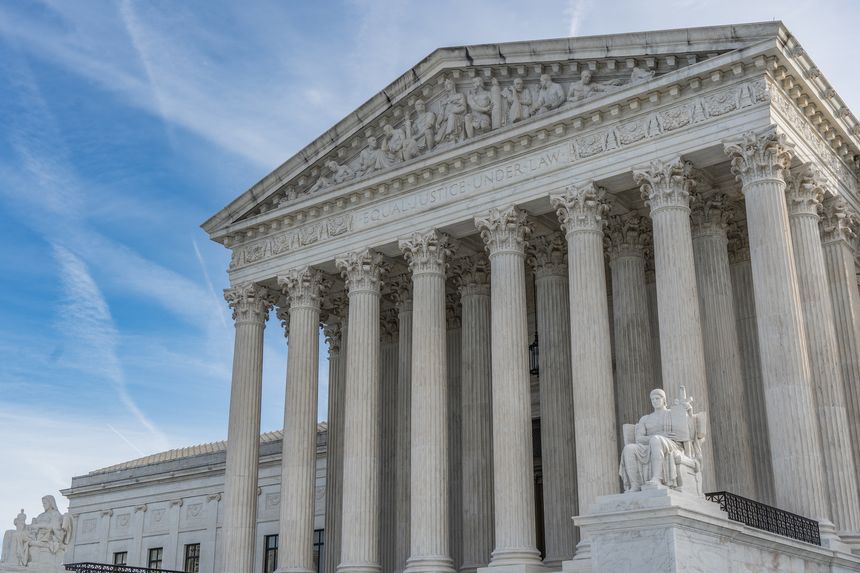
The United States Supreme Court is seen in Washington, DC

Sign up to receive our latest BRiefings delivered directly to your inbox. Subscribe

Tags

securities enforcement & litigation, white collar defense investigations & compliance, litigation & dispute resolution

Get in touch

Avatar
Jonathan Richman
Partner

Get in touch

Avatar
Jonathan Richman
Partner

Latest Insights

Florida Court Rejects Transfer Request Made After Jurisdictional Game-Playing
5/28/2026 10:56:17 PM

Florida Court Rejects Transfer Request Made After Jurisdictional Game-Playing

By Jonathan Richman
4
4
Recent Changes to EMI and VCT/EIS Effective from 6 April 2026
4/14/2026 3:32:08 PM

Recent Changes to EMI and VCT/EIS Effective from 6 April 2026

By Tracy Fisher Thomas Braiden
14
14
Revitalizing Supply Chains: Legal Strategies for Thriving in a Disruptive World
3/17/2026 5:35:17 PM

Revitalizing Supply Chains: Legal Strategies for Thriving in a Disruptive World

By Matthew Richardson Samuel Wolf
14
14