


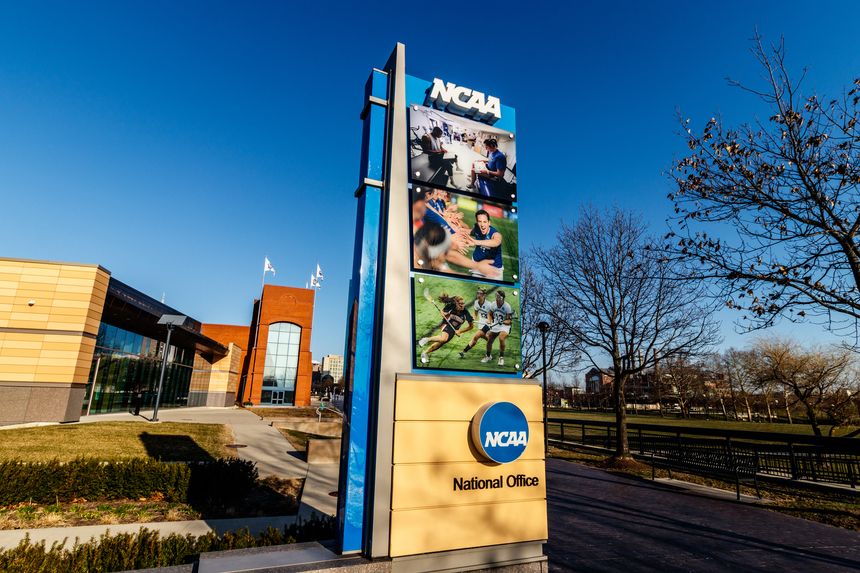
This article explores the billion-dollar settlement of in re College Athlete NIL Litigation, the third-party buyout framework for athletes, and the resulting transformation of the modern Name, Image, and Likeness (NIL) landscape.
A Long Overdue Shift
The National Collegiate Athletic Association (NCAA) historically restricted pay to college athletics – restrictions that “would be flatly illegal in almost any other industry in America.”[1] For decades, college athletes have pushed their bodies to extreme limits, frequently risking serious injury, for no pay. These “amateur” athletes have helped build billion-dollar programs, fueled TV contracts, and inspired fans around the world, while being restricted from profiting from their own name, image, or likeness. Thankfully, those restrictions have been lifted.
After years of legal challenges and mounting societal pressure, the Name, Image, and Likeness (NIL) reforms represent a long-overdue course correction. The settlement under in re College Athlete NIL Litigation will distribute $2.576 billion in back pay to current and former collegiate athletes. Athletes can now own their stories, their brands, and their futures.[2]
What the Settlement Means for Athletes
This landmark settlement, effective July 1, 2025, resolves consolidated class action lawsuits through which athletes sought to recover profits they could have earned if the NCAA had not barred them from monetizing their name, image, and likeness. Under the settlement, the NCAA and the Power Five conferences will compensate current and former student-athletes for the value they created. These payments will be distributed over the next decade to athletes grouped into three classes: (i) Football and Men’s Basketball, (ii) Women’s Basketball, and (iii) Additional Sports.[3] The settlement fund will be split into two parts. $1.976 billion of the fund covers the “NIL Claims Settlement Amount,” which will compensate for video game NIL injuries, broadcast NIL injuries, and third-party NIL injuries; the other $600 million covers the “Additional Compensation Claims Settlement Amount,” which addresses athletes’ “pay-for-play” claims.[4] These are claims that the NCAA’s prohibition on paying student-athletes for their athletic services violates antitrust laws. The class includes student-athletes who met NCAA eligibility requirements and were listed on a Division I team roster, regardless of the team or conference, between June 15, 2016 and September 15, 2024.[5]
The Real Question: Who Is Protecting You?
With this new landscape comes a new set of decisions. Third-party companies are already approaching athletes with offers to “buy out” their future settlement payments in exchange for one lump sum paid immediately.[6] On paper, this can sound tempting – fast cash and no waiting. But as with anything that involves your name and your money, the details matter.
Third-party buyouts carry serious risks. The lump sum payment may be far below the total value of the full ten-year payout. The athlete could also remain responsible for the taxes owed on the yearly settlement distribution even if the payments are being sent to the third-party.[7] However, there are also risks in waiting for the ten-year payout. Because the class action suit is being appealed, there is a risk that the settlement agreement is overturned or payments are delayed. Factoring in inflation and lost investment opportunities, an immediate lump sum may be worth more than the full award after the protracted legal process reaches a conclusion.
The court overseeing the settlement payout and class counsel have acknowledged these risks and implemented safeguards.[8] To protect and inform athletes, third-party companies must provide disclosures that explain the tax implications, clarify the risks, and show proof that the buyout was made openly and fairly. [9] Settlement distributions will be sent directly to the third-party company only when the buyout is an outright sale completed before the appeals end.
These safeguards do not limit athletes’ freedom to do as they please with their money. For far too long, athletes have been the last to be aware of their financial worth. The message from the settlement is simple: you’ve earned this. Now safeguard it by making a fully informed decision.
Owning the Future
This settlement is an opportunity for athletes to reclaim ownership over their stories and their economic destiny. The NCAA has acknowledged what athletes, families, and advocates have known for years: you deserve to share in the value you create. The third-party buyout framework is another step toward athlete autonomy, allowing athletes to recover what they are due on their terms.
A Call to Action
At Brown Rudnick, our Sports Team takes an athlete-first approach. Whether you’re a class member navigating back pay recovery or an advisor helping an athlete make smart financial decisions, we’re here to make sure that fairness and empowerment stay at the center of the conversation. These important decisions are not just about money — they are about agency and ownership.
To every athlete who’s been told “you should just be grateful,” or “that’s just how it is” — this moment is for you. The rules have changed, and the game is now being played on your terms.
Own your name. Own your story. Own your future.
[1] Nat'l Collegiate Athletic Ass'n v. Alston, 594 U.S. 69, 109 (2021).
[2] See in re College Athlete NIL Litigation, Case No. 4:20-cv-03919 (N.D. Cal.).
[3] See id. Dkt. 958-1 at 6-7.
[4] See id. at 4, 9.
[5] Eligible athletes must have submitted a claim form for direct payment by January 31, 2025.
[6] See supra note 2; Dkts. 1015, 1028.
[7] See supra note 2; Dkt. 1015 at 2.
[8]See supra note 2; Dkt. 1047.
[9] Id.
/Passle/62189924f636e915f48daeda/SearchServiceImages/2026-07-02-16-19-01-465-6a468f75d735c46d2f423686.jpg)
/Passle/62189924f636e915f48daeda/SearchServiceImages/2026-06-18-16-22-44-785-6a341b54697dc74b3cef5bfc.jpg)
/Passle/62189924f636e915f48daeda/SearchServiceImages/2026-06-05-15-49-39-078-6a22f013dc71033ce26d9c21.jpg)
/Passle/62189924f636e915f48daeda/SearchServiceImages/2026-05-29-14-43-18-859-6a19a606d037c7ef616e1874.jpg)